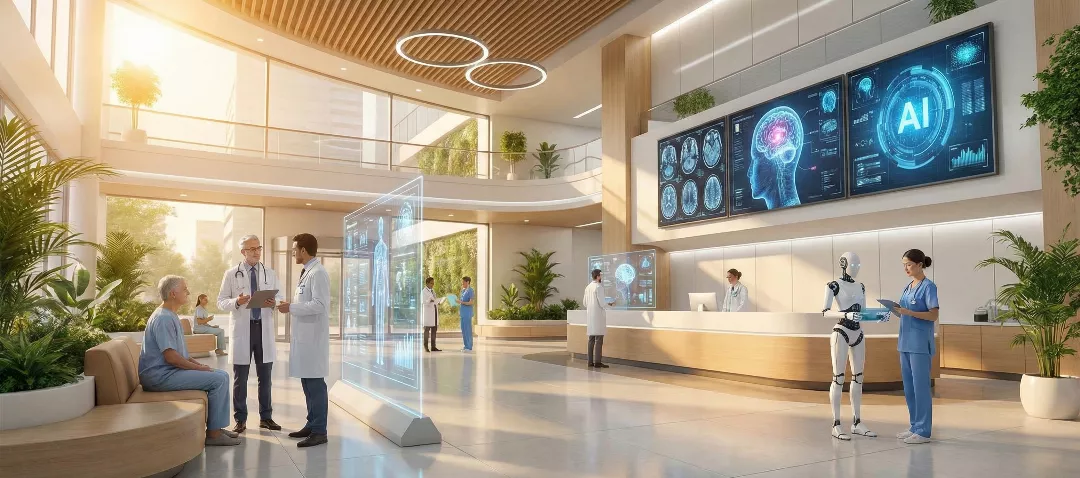
Hospital marketing is much more than just “let's advertise”. Unlike a clinic, a hospital operates with a wider range of branches, more contact points and higher expectations. Sometimes a patient comes with an urgent need, sometimes gets a second opinion, sometimes seeks a check-up, and sometimes stays committed to the same institution for years. It is not easy for a single team to manage so many different journeys with the same quality.
At this point, the use of artificial intelligence in hospitals offers a great opportunity to "establish order" on the marketing side. Artificial intelligence is not like a magic solution here; It works like an assistant that collects scattered data, automates repetitive tasks and personalizes communication. When implemented correctly, it not only brings in more applications, it makes it easier for the application to turn into an appointment, it makes the patient feel safe throughout the process, and it helps the management make decisions based on "knowing" rather than "feeling".
In this article, we will discuss step by step where artificial intelligence in marketing for hospitals really creates value, how to get started and what mistakes should be avoided.
What Does the Use of Artificial Intelligence in Hospitals Mean? Coming?
When it comes to the use of artificial intelligence in hospitals, most people think of diagnostic systems. However, on the marketing side, artificial intelligence is more related to patient communication and process management. Tasks such as making sense of the applications accumulated in the hospital's digital channels (website, social media, call center, WhatsApp, e-mail), directing them to the right unit, increasing response speed, planning content, optimizing advertisements and organizing reputation management constitute the daily burden of marketing. Artificial intelligence provides both speed and consistency here.
There is an important distinction: Artificial intelligence should not be used in marketing to “convince the patient”, but to deliver the right information at the right time and reduce friction in the process. When it comes to health, aggressive sales language brings appeal in the short term, but loses trust in the long term. For hospitals, brand value is more valuable than the campaign.
Patient Journey and Touch Points
Hospitals' biggest loss in marketing usually occurs at the "demand came but disappeared" stage. The person fills out the form on the website, cannot reach the call center, writes on WhatsApp, but the response is late. Or the unit misleads and the patient has to tell the same story three times. This reduces trust and the patient decides in favor of another institution.
Artificial intelligence-supported systems make things easier by combining these contact points in a single flow. For example, it can classify incoming requests by branch, understand the level of urgency, distinguish the patient's intention (is he asking for a price, asking for an appointment, looking for information) and leave a clear summary to the relevant team. This way, the marketing team is not “message hunting”; manages a neat queue.
Where to Start? A Simple Roadmap for Hospitals
Hospitals often want to start big, but the best results come from a small project. As a first step, it makes sense to choose the 2-3 branches with the highest demand. In these branches, application channels are clarified, frequently asked questions are determined, and response times are measured. Then, the first response, classification and appointment routing flow is established with artificial intelligence.
Then, a small optimization is made on the advertising side: keywords that do not bring conversions are cleaned, content that performs better is strengthened. In the third step, an SEO content plan is created. In the fourth step, comment analysis and satisfaction measurement come into play. In this way, hospital marketing grows system-based, not "campaign-based".
Where Do Hospitals Use Artificial Intelligence in Marketing?
When it comes to the use of artificial intelligence in hospitals, the first thing that comes to mind is "blogging", but real life is broader. The most common usage areas we encounter are:
- On the website and SEO side, establishing the correct page structure with search intent analysis; moving frequently asked questions into an organized information architecture; To provide consistent expression on doctor/branch pages; Marking technical SEO errors and managing the content update calendar. The real value here is not "too much content", but having the right content in the right place. Because in healthcare, the user who comes to the wrong page leaves quickly; This disrupts both organic performance and brand perception.
- On the advertising side, systematization of creative production; testing different messages for the same service in different target markets; clarifying the call-to-action without exaggeration; Automatic risk screening of campaign texts according to platform standards. Meta's personal characteristics standard makes this need for risk screening even more important.
- In reputation management, tasks such as classifying comments, drafting responses according to the corporate language, reporting recurring complaint themes and forwarding them to the relevant units as action come to the fore. Reputation management for hospitals is not the “afterthought” part of marketing; It is the heart of marketing.
- Artificial intelligence on the appointment and call center side; It can guess which branch the incoming message belongs to and direct it to the right team, collect preliminary information during busy hours, and answer general questions such as "how does the process work" in a standard and controlled language. The main rule here is that the system does not give diagnosis/treatment recommendations; informs and moves it to the right channel.
How is Artificial Intelligence Changing Hospital Marketing?
The marketing world has progressed for many years based on demographic forecasts and general assumptions, but artificial intelligence has completely changed this situation. Hospitals now know precisely with data what their target audience wants, rather than guessing. Artificial intelligence algorithms clearly reveal potential patient profiles by analyzing website visitors' behavior, social media interactions and past appointment data.
Thanks to this technology, marketing budgets are directed to channels with the highest conversion rates and unnecessary expenses are prevented. Market research, which used to take months, can now be carried out in seconds thanks to artificial intelligence tools, allowing instant strategy changes. By transitioning from a reactive structure to a proactive marketing approach, healthcare institutions can anticipate the needs of patients before they demand it.
Where to Start in Marketing When Using Artificial Intelligence in Hospitals?
- Select “low risk” areas first: such as FAQ pages on the website, language simplification of service pages, content plan and update schedule.
- Create a checklist for each piece of content: is there any over-promise, is there a risk of redirection, is there a breach of privacy; Does it contradict the promotion-information principles in the 2025 regulation?
- Design the language sensitivities of platforms such as Meta/TikTok from the beginning; Filter texts according to rules such as Meta's "implication of personal characteristics" standard.
- Put the KVKK side at the beginning of the project: health data is sensitive data; Clarify the questions of who sees the data, where is it stored, is it exported?
- Finally, connect the campaign and the operation: let lead classification, return SLAs, appointment conversion tracking and reporting talk in the same system.
How Do Chatbots and Virtual Assistants Improve Patient Communication?
One of the biggest problems of hospitals is heavy phone traffic and waiting times. Artificial intelligence-powered virtual assistants and chatbots are one of the most effective tools developed to solve this problem. These systems, which are active 24/7 on websites and mobile applications, provide an uninterrupted communication experience by instantly answering patients' questions. Routine operations such as creating an appointment, learning test results, and inquiring about doctor's working hours are completed within seconds without the need for human intervention.
Advanced bots with natural language processing ability can understand complex sentences written by patients and give empathetic answers. This technology relieves the burden on call center employees, allowing them to focus on more complex and urgent situations.