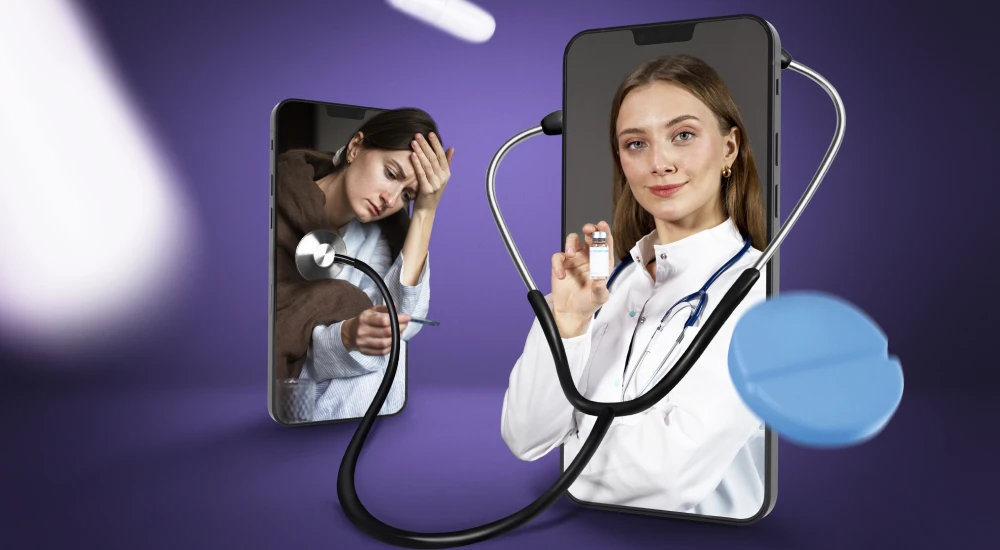
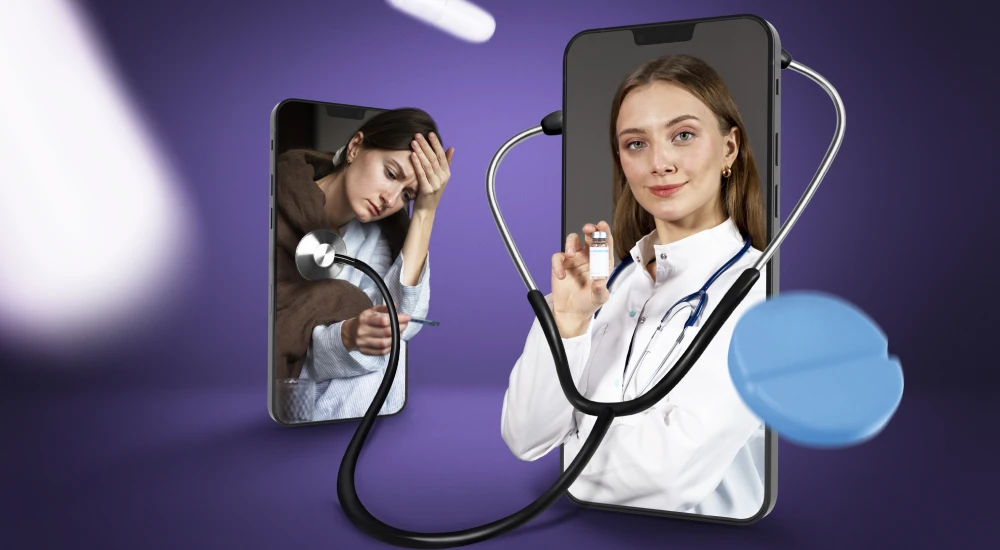
What is Google Ads for the Healthcare Sector?
Google Ads for the Healthcare Sector allows hospitals and clinics to reach more patients by increasing their visibility in search results.
Google Ads offers paid advertising campaigns that aim to appear before potential patients when searching for relevant healthcare services. With keyword targeting, the right people are reached, the advertising budget is optimized and conversion rates are increased. Patient appointments are supported with service-based campaigns, location targeting and mobile compatible ads.
Compliance with legal regulations is of great importance in healthcare sector Google Ads campaigns. Google ads prepared with the right strategy create a reliable brand perception in digital and accelerate patient acquisition.
Why Should Healthcare Institutions Use Google Ads?
Crabs Media SEO said:
By using Google Ads, healthcare institutions have the opportunity to quickly and targetedly reach patients seeking their services.
Google Ads provides a competitive advantage and increases patient acquisition by appearing at the top of search results. Thanks to service-based campaigns, special promotions can be made for areas such as aesthetics, dentistry and orthopedics. With location targeting, it becomes easier to reach local patients, and costs are kept under control by optimizing the advertising budget.
Thanks to the pay-per-click (CPC) model, payment is made only for ads that bring results. Google Ads campaigns prepared with ethical and legal content suitable for the healthcare sector contribute to digital success.
Advantages of Google Ads in the Healthcare Field
Google Ads increases visibility by providing quick and effective access to patients seeking services in the healthcare field.
With this advertising model, hospitals, clinics and doctors can reach the target audience directly. Thanks to keyword targeting, you can reach the right user at the right time. Location and language targeting can be used to reach local and international patients. Advertising performance can be measured, the budget can be managed flexibly and conversion rates can be optimized.
Google Ads increases brand awareness and also increases the number of appointments. Reliable digital communication can be established and a competitive advantage can be achieved through ethical campaigns in the field of healthcare.
What are the Types of Google Ads?
Health Sector Google Ads is not just a single pattern; works with ad types that correspond to different stages of the patient journey. Strategy; It consists of layers that increase awareness, capture intention and eliminate hesitations.
Search Network Ads
It is the area where intention is felt most intensely. The user you capture with queries such as “treatment + city”, “symptom + solution”, “physician + branch” is very close to the decision moment. What needs to be done here is to move the user to the relevant physician/treatment page with an informative and reassuring text that is not overly assertive.
Display Ads
Ideal for awareness and retargeting. When you reach the right segments with simple and respectful visuals; You create a basis for meeting without overwhelming the user with aggressive calls. Display is the “reminding and reinforcing” component of the campaign ecosystem.
YouTube Ads
Videos with physician narration, animations explaining the processes and guiding contents; Increases YouTube's potential to generate trust. Video makes complex procedures understandable and, when combined with remarketing, accelerates the appointment decision.
Remarketing
Kindly welcoming back users who are interested but undecided significantly increases conversion performance. At this stage, the message should be in the tone of "we understand you, the process goes like this"; Oppressive or guaranteeing language should not be used.
Legal Limits for Google Ads in the Healthcare Sector
Legislation in healthcare communication draws sensitive boundaries in order to protect the patient. These limits; It requires avoiding expressions such as “guarantee”, “miracle”, “definite result”, requiring context and permission in before/after images, and meticulously protecting patient privacy. Health Sector Google Ads texts should remain informative and free from exaggeration.
All content must be approved by a physician, open consent processes must be implemented and platform policies must be observed; It is mandatory for the sustainability of the campaigns. Thus, corporate reputation is protected as well as advertising performance.
Google Ads Strategies in Health Tourism
Aiming at international patients; It is necessary to manage language, culture, time difference and logistics issues simultaneously. Healthcare Google Ads is customized on a country-by-country basis with multilingual campaigns. Landing pages; localized in terms of currency, date format, communication channels and business hours. Keyword work is done according to “local search patterns” in each language; For example, it is unforgettable that the same treatment is sought under different names in different markets. Call center/WhatsApp responses are also available in the target language and at appropriate hours. When this integrity is established, advertising produces not only traffic but also qualified appointments.
Leaving Google Ads Management to an Expert Agency
An experienced team; Manages legislation, platform rules, analytics, landing page experience and content stack all at the same table. Agency in Health Sector Google Ads management; It constantly updates negative word lists, examines search term reports, tests landing page-advertising message compatibility and standardizes the conversion tracking infrastructure (search, form, WhatsApp, appointment).
It also tracks real performance with metrics such as "cost per appointment", "appointment quality" and "no-show rate". This way, you buy “results”, not just “clicks”.
Optimization Tips for a Successful Campaign
Healthcare Google Ads success depends on regular maintenance and testing, not a one-time installation. Text variations, landing page layouts, button texts, visual/video content and target audience breakdowns should be subjected to periodic A/B tests. Mobile speed, number of form fields and one-click communication options directly affect the conversion rate.
Offers and messages should be updated during periods when search intent changes (such as seasonal illnesses, holiday periods, exam/work intensity). Regularly reading the "which country/city-which time-which device" trio in reporting moves the budget to the right channel.
Health Sector Google Ads Prices 2025
Cost; It varies depending on the number of targeted branches, country/language diversity, campaign scope (search, display, YouTube, remarketing), content and landing page production needs, reporting depth and speed expectations. While some institutions only require a limited pilot for a specific treatment and a single location, others require simultaneous multilingual management.
The healthiest method is; The aim is to create scope by clarifying the existing data, objectives and constraints in a short discovery meeting. Contact us now for Healthcare Sector Google Ads prices.
Frequently Asked Questions
Is Google Ads legal in the healthcare industry?
When information-oriented, understated and patient privacy-protecting language is used; It is possible to proceed within the legal framework when physician approval and platform policies are observed. The important thing is; Avoiding the word “guarantee”, providing permission and context in before/after images, and meticulously protecting personal data. If the Health Sector Google Ads texts stay within this framework, they will produce sustainable results in the long term.
How long does it take to start patient acquisition with Google Ads?
The accuracy of the campaign setup, the speed of the landing page and message compliance are the determining factors. For keywords with high search intent, it is possible to receive qualified applications in the first weeks, thanks to a mobile-friendly site and clear contact buttons. However, the real efficiency becomes visible after a few weeks of learning period with regular optimization and A/B testing.
Can I still advertise if my budget is low?
Give priority to the search network and high-intent keywords; postpone broad targeting.
Start with single treatment or single location; expand gradually according to performance.
Simplify the landing page with a single action focus and increase your mobile speed.
Limit the calling hours to the periods where your appointment team is reachable.
Do those who click on the ads become real patients?
Converting the click into an appointment; It depends on text-page harmony, easy access to phone/WhatsApp and call center discipline. Healthcare Google Ads just opens the door; The flow that gently invites you in is the landing page and CRM processes. Quick response, process transparency and physician explanation significantly increase the appointment quality.
How should keyword selection be made?
Determine high intent clusters such as “treatment + city/country” and “symptom + solution” as the core.
Add non-brand, high-cost but low-quality terms to the negative list.
Study local search patterns separately for each language; test different names of the same treatment.
Read the query reports regularly and add new opportunity and exclusion words.
Do Google ads replace SEO?
No; The two take on different roles. Healthcare Sector Google Ads produces rapid visibility and instant demand conversion. SEO, on the other hand, provides long-term, trust-oriented organic visibility. Best results are achieved in an integrated model where two channels feed each other: advertising data enriches content opportunities, SEO data enriches advertising keywords.
How are advertising results measured?
Call, form, WhatsApp and online appointment conversions are tagged separately; Reported based on device, time, country/city, ad group and keyword. When campaign metrics are combined with clinical metrics such as “cost per appointment,” “appointment quality,” and “no-show rate,” true performance becomes visible. In this way, the budget can be quickly shifted towards highly efficient combinations.